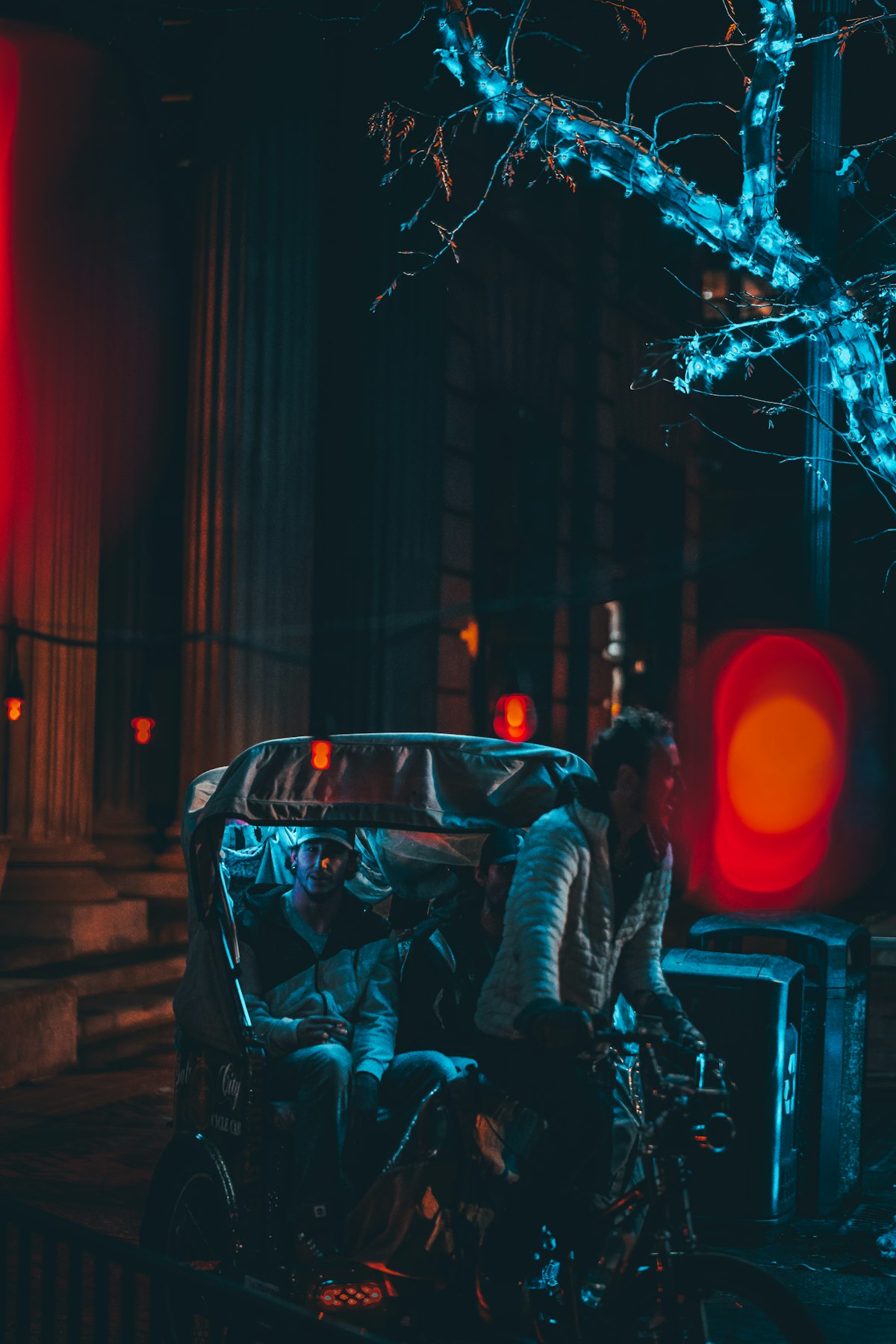
Here’s a fun experiment. Go buy two bike lights that both claim to be “800 lumens.” Turn them on side by side. One will look like a small sun. The other will look like someone pointed a flashlight at you from across a dimly lit parking garage.
Same number. Completely different brightness. What happened?
The cycling industry happened. And they’ve been pulling this trick for years.
I’ve been a bike mechanic for over twenty five years, which means I’ve also been the guy people ask “what light should I buy” roughly ten thousand times. The answer is never as simple as “get the one with the biggest number,” because the biggest number is usually the one the manufacturer made up while daydreaming about their sales targets.
Let me explain the lumen lie, show you what counts, and recommend lights that will keep you alive without requiring a second mortgage.
The Lumen Lie, Explained (The Industry’s Favorite Trick)
Lumens measure the total amount of visible light emitted by a source. Sounds straightforward, right? More lumens equals more light equals safer. The industry loves this logic because it lets them print a bigger number on the box and charge a bigger price.
The problem is that lumen ratings are almost always measured at peak output. That means the light is turned on, measured for about three seconds, and then the number goes on the box. What they don’t tell you is what happens next.
Thermal throttling. That’s what happens.
Every LED generates heat. More lumens means more heat. Heat kills LEDs. So every decent light has a thermal management system that automatically reduces brightness when the light gets too hot. That “800 lumen” light might output 800 lumens for about thirty seconds before the thermal protection kicks in and drops it to 400 or 500. For the rest of your ride, you’re running at half the advertised brightness.
Some manufacturers are honest about this and publish runtime graphs showing the actual output over time. Those are the ones worth your money. The rest are selling you a number that exists for about as long as a Snapchat message.
There’s also the matter of how the light is measured. Some companies measure total light output in an integrating sphere, which counts every photon going in every direction. Others measure just the beam center, which looks brighter but might be throwing light where you don’t need it. There’s no universal standard enforcement, so basically everyone picks the number that makes their product look best.
How Many Lumens You Need (It’s Less Than You Think)
This depends entirely on where you ride.
City commuting with street lights: You need between 200 and 400 lumens. Seriously. That’s it. Street lights are already doing most of the work. Your bike light’s job is to make you visible to cars and to illuminate the road surface directly in front of you where potholes and debris hide. You don’t need to turn night into day. You need to be seen and to see the immediate road.
Suburban riding with some street lights: 400 to 600 lumens covers you. There are stretches where street lights end and you need enough light to spot obstacles and road hazards before you hit them.
Rural or trail riding with zero ambient light: 600 to 1,000 lumens. At this point you’re the only light source and you need enough output to see the road surface at riding speed. Anything above 1,000 on a shared path is basically a weapon aimed at oncoming traffic.
The blinding problem, and this is something nobody talks about. If you run a 1,500 lumen light on a shared bike path, you are blinding every oncoming cyclist and pedestrian. You’re not being safer, you’re being dangerous. It’s like driving with your high beams on in traffic. Sure, you can see great. Everyone else is temporarily blind.
In the city, angle your light slightly downward. Not straight ahead like a searchlight. Downward. About five to ten degrees. This puts the beam on the road in front of you instead of in the eyes of everyone coming the other way. It’s a small adjustment that makes you significantly less of a menace.
Front Light Recommendations
The Workhorse: Cygolite Dash Pro 600
This is the light I recommend to every single person who asks me what to buy. It’s not the brightest. It’s not the fanciest. It outputs around 600 lumens on high and runs for about two hours at that level before stepping down. The lower modes run for ages, we’re talking eight to twelve hours on flash.
The beam pattern is clean and well shaped, not just a circular blob of light that blinds oncoming traffic. The mount is solid, quick release, and fits most handlebar sizes without tools. It charges via Micro USB, which is a minor annoyance in a USB-C world, but honestly the battery life makes up for it.
I’ve used this light for years. It’s been rained on, dropped, and survived me forgetting it was on the bike through a thunderstorm. It just keeps working. That’s what you want from something that stands between you and a driver who’s looking at their phone.
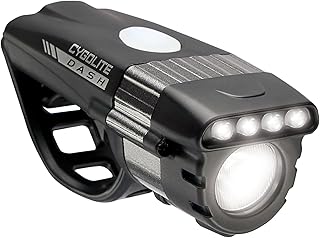
The good: Reliable, honest output, good beam pattern, solid mount, long flash battery life, been around long enough to prove itself.
The annoying: Micro USB instead of USB-C. The button is small and hard to find with gloves. Not the lightest option if weight is a concern.
Who should buy it: Everyone. Seriously. Unless you ride exclusively on pitch-black roads, this handles everything.
Check the Cygolite Dash Pro 600 on Amazon
The Bright Beast: Fenix BC26R
If you ride in darker areas or want something that can handle both city and suburban riding without thinking about it, the Fenix BC26R is the upgrade. Sixteen hundred lumens on turbo, with a beam that throws light a ridiculous distance down the road.
The 21700 battery is massive, you get hours of runtime even on high. USB-C charging. The quick detach mount is one of the better designs I’ve used, it doesn’t rattle on rough roads and the light pops off when you need to take it with you.
The downside, and there’s always a downside, is that 1600 lumens is more than you need for 90% of commuting. If you use turbo mode on a shared path, you’re that person. The beam is also more focused than flood, which means great distance but less peripheral visibility.
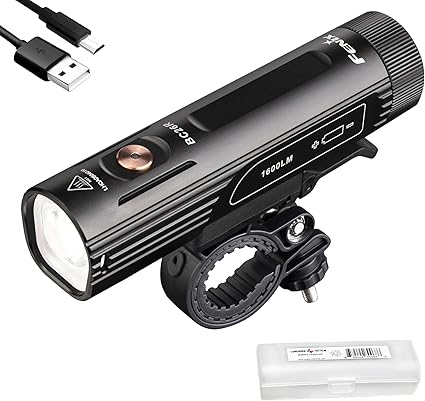
The good: Insanely bright, massive battery, USB-C, solid build quality, Fenix reputation for honest specs.
The annoying: Overkill for city riding. The turbo mode is basically a car headlight strapped to your handlebars. More expensive than the Cygolite.
Who should buy it: Suburban commuters with dark stretches. Rural riders. People who want one light that handles everything from city streets to unlit back roads.
Check the Fenix BC26R on Amazon
The Minimalist: Ravemen FR500
Some people want a light that doesn’t look like they strapped a searchlight to their handlebars. The Ravemen FR500 is for those people. It mounts right underneath your Garmin or Wahoo bike computer, between the computer and its mount. No ugly straps. No extra brackets. Just a clean cockpit with a light hiding in plain sight.
Five hundred lumens, which is honestly plenty for city riding. USB-C charging, and it doubles as a power bank in emergencies, which is one of those features you don’t think you need until your phone dies mid-ride and suddenly it’s the most important thing in the world.
The beam throws about 150 meters, which is more than enough at city speeds. Thirteen hours on flash mode. It weighs barely anything.
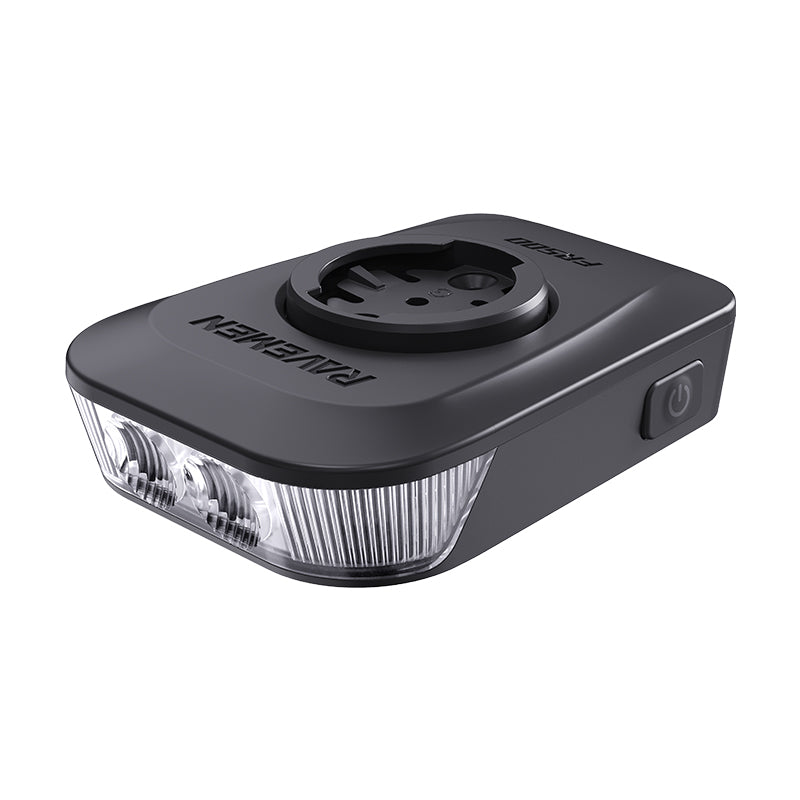
The good: Under-computer mount is genius, USB-C, power bank feature, super light, long flash battery.
The annoying: Only works if you have a Garmin or Wahoo on your bars. The 500 lumen max means it struggles on completely dark roads. You need the handlebar adapter sold separately if you don’t run a bike computer.
Who should buy it: Road cyclists with bike computers. Minimalists. People who hate cluttered handlebars. Anyone who wants a light they forget is even there.
Check the Ravemen FR500 on Amazon
Rear Light Recommendations
The “Please Don’t Hit Me” Standard: Magicshine SEEMEE300
The rear light is arguably more important than the front. Cars approaching from behind are the biggest threat to cyclists, and a bright, visible tail light is the difference between “driver sees you and moves over” and “driver doesn’t see you until the last second.”
The SEEMEE300 pumps out 300 lumens with multiple flash modes including a daytime visible setting that works in bright sunlight. The battery lasts up to 40 hours on flash mode, which means you can commute for a week without charging if your rides are under half an hour each way. It has a built in brake sensor that boosts brightness when you slow down, and it auto powers on when it detects motion.
Under fifty bucks. This is the rear light baseline. If you’re riding without something like this, you’re making a choice I wouldn’t make.
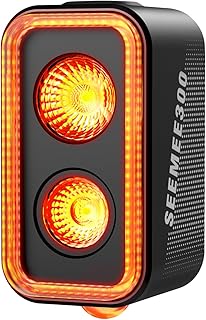
The good: 300 lumens, 40 hour battery on flash, brake sensor, auto on/off, USB rechargeable, stupidly affordable.
The annoying: The rubber mount can bounce loose on rough roads, which is annoying. The brake sensor occasionally triggers on bumps, which makes you look like you’re braking when you’re not. Micro-USB charging instead of USB-C.
Who should buy it: Every single cyclist. Period. This is the rear light baseline.
Check the Magicshine SEEMEE300 on Amazon
The Radar Option: Magene L508 Radar Tail Light
This one’s for the tech lovers. The Magene L508 has a built in radar that detects approaching vehicles and increases the flash intensity when they get close. It pairs with Garmin and Wahoo bike computers to show you approaching vehicles on screen, so you know what’s behind you without turning your head.
The radar detection range is about 140 meters, which gives you plenty of warning. The light itself is bright and the flash patterns are designed to be visible from far away. It’s the closest thing to having eyes in the back of your head.
The downside is price, it’s expensive for a tail light. The radar drains battery faster than a standard light. And you need a compatible device to use the radar features, otherwise it’s just a really expensive blinking light.
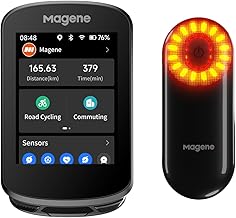
The good: Radar detection is a real safety upgrade. Light is bright. Pairs with bike computers. 220 degree viewing angle.
The annoying: Expensive for a tail light. The radar drains battery faster. You need a Garmin or Wahoo to get the full benefit.
Who should buy it: Riders who do a lot of road cycling in traffic. Tech-savvy commuters. Anyone who wants an extra layer of awareness.
Check the Magene L508 on Amazon
Mounting and Practical Stuff
Handlebar mounts: Most front lights come with a rubber strap or a quick release bracket. Rubber straps work on almost any diameter and are quick to swap between bikes. Quick release brackets are more secure but only fit one bar diameter. If you bounce between bikes, go strap. If you have one commuter, go bracket.
If your light keeps rotating on the bar during rough roads, wrap a layer of electrical tape around the handlebar where the mount sits. It adds grip without permanent modification. Looks a little janky but who cares, it works.
Charging discipline: Charge your lights the night before, every night. Not “when you remember.” Not “when the low battery light comes on.” Every single night, plug them in. If you’re just starting to bike commute, building this habit early saves you from the embarrassing “riding home in the dark” situation that catches every new commuter at least once.
I’ve had more than one morning where I grabbed my bike, rode out, and realized three blocks in that my front light was dead. Riding in the dark isn’t just illegal in most places, it’s genuinely terrifying when a car doesn’t see you until the last second.
Weather: Most commuter lights are water resistant but not waterproof. Riding in heavy rain is usually fine. Submerging your light in a puddle is not. If you ride in rain regularly, dry your lights off when you get home and check the charging port for moisture before plugging in.
The Takeaway
Forget the lumen arms race. Buy a light with honest specs, a good beam pattern, and a battery that lasts your commute. Front and rear. Every ride.
The Cygolite Dash Pro 600 is the workhorse that handles most people’s needs. The Fenix BC26R is the upgrade for darker roads. The Ravemen FR500 is for anyone who hates handlebar clutter.
Charge them every night. Angle the front light down. And for the love of everything two-wheeled, stop blinding oncoming traffic with your 1,500 lumen searchlight on a shared bike path. You’re not Batman. You’re a commuter.
Found this useful? Share it with a fellow rider.
🚲 Get LaneSpotter in Your Inbox
Weekly riding tips, gear deals, and no-BS reviews. No spam, unsubscribe anytime.
Join 500+ riders who skip the marketing fluff
Leave a Reply