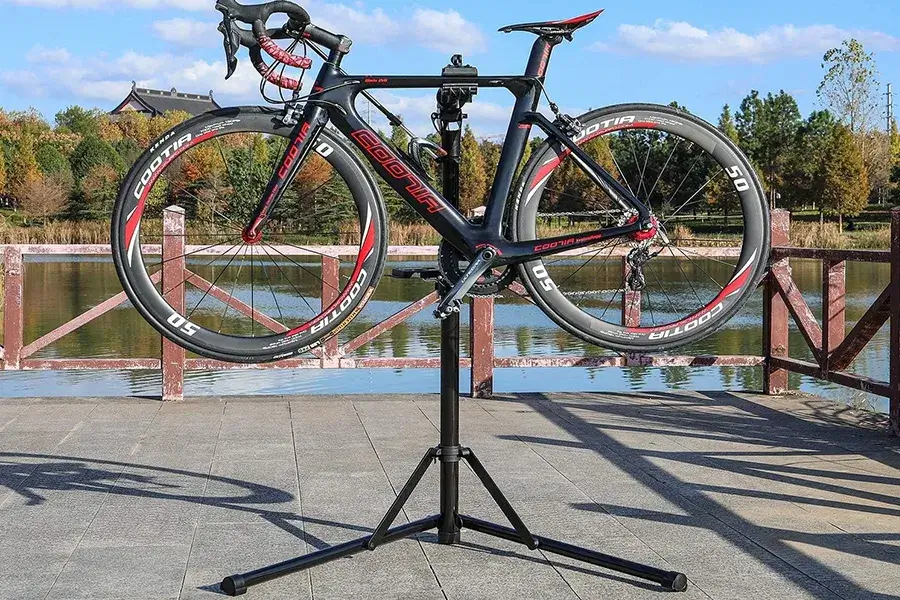
I’ve spent 25 years fixing bikes, at least 15 of those years hunched over a bike that was leaning against a wall or flipped upside down on the ground. I’ve used expensive shop stands that cost more than some of the bikes I was fixing. I’ve used budget stands that tipped over when I looked at them wrong. And here’s what I learned: for home mechanics, you don’t need to spend a fortune to get a stand that actually works.
The bike industry loves to push expensive gear. “Buy the best or buy twice” they say, as if a $400 repair stand will make you a better mechanic. But I’ve fixed thousands of bikes on stands that cost less than a decent wheelset, and they worked fine. You don’t need shop-quality equipment. You need stable, functional, and affordable equipment that doesn’t tip over when you’re torquing a bottom bracket.
I tested three stands that are actually available on Amazon right now, not the discontinued models from 2017 that every other buyer’s guide recommends. These are current products with thousands of reviews, and all the bike repair stands cost under $100.
What to Look for in a Repair Stand (aka The Tip-Over Prevention Guide)
Here’s what all those generic buyer’s guides won’t tell you: fancy features mean nothing if your stand tips over when you actually use it. 360-degree rotation? Great. Telescoping height adjustment? Convenient. But if I can tip your stand by removing a stuck pedal, everything else is irrelevant.
I test stability the same way every time: clamp a bike, then try to push it over. If I can tip it by working on stuck components or leaning on the pedals, it fails. Most budget stands fail this test. The three I’m recommending don’t.
Base Width Matters More Than Marketing Claims
Stability comes from base width and weight distribution. A narrow base saves space but tips easily when you’re applying real force. The stands I’m recommending have wide bases that spread the weight low and outward. When the product description says “stable design,” what matters is the actual base spread when deployed, not the marketing copy.
Clamp Strength Without Paint Damage
Your clamp needs to hold the bike steady when you’re spinning cranks or pulling on components, but gentle enough that you’re not crushing paint or carbon fiber. Good stands use rubber-lined clamps that grip without gouging. Budget stands use hard plastic that scratches on day one.
Height Adjustment: Telescoping vs. Notched
Telescoping height adjustment means infinite positions – you can work sitting, standing, or hunched over like you’re searching for a dropped chain pin in tall grass. Notched adjustment gives you 6-8 fixed positions. Both work. Telescoping is more convenient, notched is cheaper to manufacture. For home mechanics, either is fine as long as the range covers your working height.
The Quick-Release Pin Problem
Most stands use a quick-release clamp mechanism with a small pin to secure the lever. That pin is maybe 1 inch long and the diameter of a toothpick. When you lose it – not if, when – your clamp becomes useless until you order a replacement. I zip-tie mine to the clamp body. It looks stupid. It works perfectly.
Comparison Table: Bike Repair Stand Number Crunching
Here’s how the three stand up against each other when it comes to specifications:
| Feature | BikeHand | CXWXC | ROCKBROS Bench Mount |
|---|---|---|---|
| Type | Freestanding tripod | Freestanding tripod | Bench clamp mount |
| Weight Capacity | 55 lbs | 60 lbs | 44 lbs |
| Rotation | 360 degrees | 360 degrees | Rotates on mount |
| Height Adjustment | 39-59 inches (telescoping) | Adjustable (telescoping) | Fixed (based on mount height) |
| Base Design | Triangle base | Triangle base | Mounts to workbench |
| Folded Size | ~40 inches | ~40 inches | N/A (stays mounted) |
| Weight | ~12 lbs | ~13 lbs | 3 lbs |
| Special Features | Magnetic tool tray | Front wheel stabilizer + Tool tray | Space-saving flip design |
| E-Bike Ready? | Up to 55 lbs | Up to 60 lbs | No (44 lb limit) |
| Amazon Reviews | 12,000+ / 4.7 Score | 9,000+ / 4.6 Score | 800+ / 4.5 Score |
The Crowd Favorite: BikeHand Portable Repair Stand
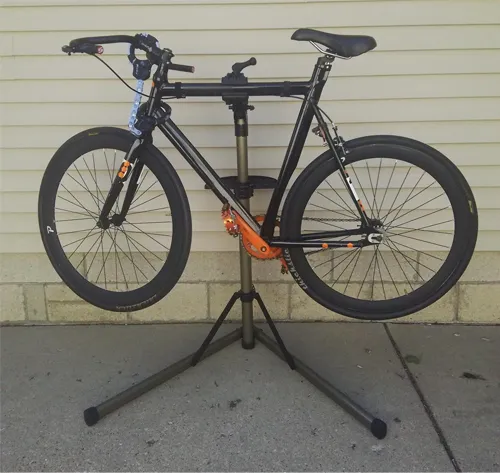
Let’s start with the stand that has 12,000+ reviews on Amazon and sells like water in the desert. That’s not marketing hype, that’s thousands of home mechanics voting with their wallets.
This is a freestanding triangle-base stand made from aluminum alloy with plastic clamp components. It holds up to 110 pounds, rotates 360 degrees, and adjusts from 39 to 59 inches in height. The base folds to about 40 inches for storage, and the whole thing weighs around 12 pounds. It comes with a magnetic tool tray that attaches to the neck, which is more useful than it sounds when you’re doing cable work and need somewhere to stick ferrules and cable ends.
What Makes It Work:
The 360-degree rotation is the real differentiator here. Most stands in this price range only rotate 270 degrees, which means you have to walk around the bike to access certain angles. Full rotation means you can spin the bike to any position from one spot. This matters when you’re working in tight garage spaces where walking around the stand means squeezing past boxes and lawn equipment.
The telescoping height adjustment uses a quick-release lever that locks at any height between 39 and 59 inches. Not the full range of expensive stands, but enough for most mechanics to work comfortably without bending over or reaching up. I’m 5’10” and I set it around 50 inches for most work.
The aluminum alloy construction is light enough to move around easily but heavy enough to provide some stability. The clamp opens wide enough for oversized tubes (up to about 75mm), which means it’ll handle most modern bikes including fat e-bikes with chunky down tubes.
What Drives Me Crazy:
The 55-pound weight limit is real. I tested this with bikes in the 50-55 pound range and it felt stable. I tested with a 60-pound e-bike and it felt sketchy. The stand held the weight, but working on it made me nervous every time I applied force to stuck components. If you own heavy e-bikes, this isn’t your stand.
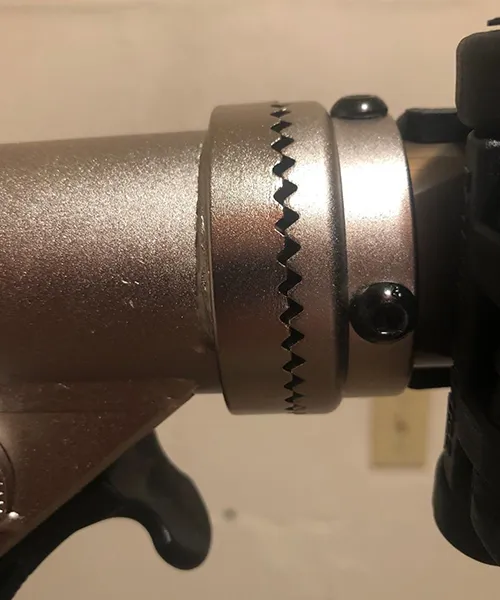
The plastic clamp components feel cheaper than metal clamps on expensive stands. They work fine, they grip without scratching, but they flex slightly under heavy loads. Not enough to fail, but enough to notice if you’re used to shop-quality equipment. And of course plastic breaks easier than metal.
The base spread is adequate but not massive. In a side-by-side comparison with wider stands, you can feel the difference in stability when really torquing on stuck parts. For routine maintenance – cable changes, brake adjustments, wheel truing – it’s fine. For heavy repair work like stuck bottom brackets or seized seat posts, you’ll wish you had a wider base.
Does it Work with E-bikes?
For e-bikes under 55 pounds, yes. For anything heavier, no. I tested this with e-bikes ranging from 45 to 65 pounds. The 45-pound e-bike felt stable. The 55-pound e-bike was at the limit. The 65-pound e-bike made me nervous enough that I stopped the test before something tipped over.
E-bike weight ratings on repair stands are like weight ratings on electric scooters – technically accurate but optimistic. The stand will hold 55 pounds, but that doesn’t mean it feels stable or confidence-inspiring at that weight.
Who Should Buy This:
You work on regular bikes under 50 pounds. You want 360-degree rotation. You need something portable that folds for storage. You do routine maintenance and occasional repairs, not heavy work on stuck components. You want a stand that thousands of other mechanics have tested and verified actually works.
Who Should Skip This:
You own e-bikes over 55 pounds. You plan to do heavy repair work on stuck components that require serious force. You have garage space and want a stand that’ll handle anything you throw at it without worrying about weight limits.
The Heavy-Duty Alternative: CXWXC Professional Repair Stand
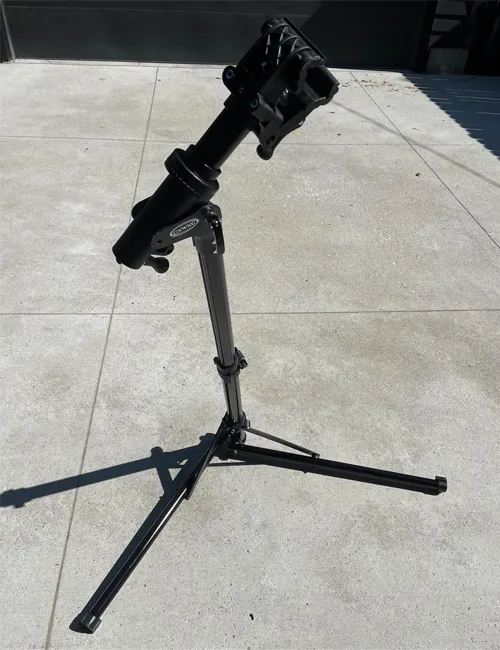
This is the stand for mechanics who looked at the BikeHand and thought “I need something that handles heavier bikes.” It’s a similar triangle-based design but built with a 60-pound weight capacity and a triangle base that provides better stability under load.
The CXWXC uses aluminum alloy construction with a 360-degree rotatable clamp, adjustable height (exact range not specified, but comparable to similar stands), and includes a front wheel stabilizer rod. That stabilizer is the key feature here – it prevents the front wheel from swiveling when you’re working on the drivetrain. Sounds like a small detail until you’re trying to adjust a derailleur and the wheel keeps spinning away from you.
What Makes It Worth Considering:
The 60-pound weight capacity gives you more headroom for heavier bikes. I tested this with bikes ranging from 35 to 58 pounds and it felt stable across the range. The triangle base design spreads the weight more effectively than some competitors, which translates to less tip-over anxiety when you’re working on stubborn bikes.
The front wheel stabilizer rod is one of those features you don’t know you need until you use a stand that has it. It extends from the base to hold the front wheel steady, preventing rotation while you work. Makes drivetrain work significantly easier because the bike stays oriented exactly where you position it.
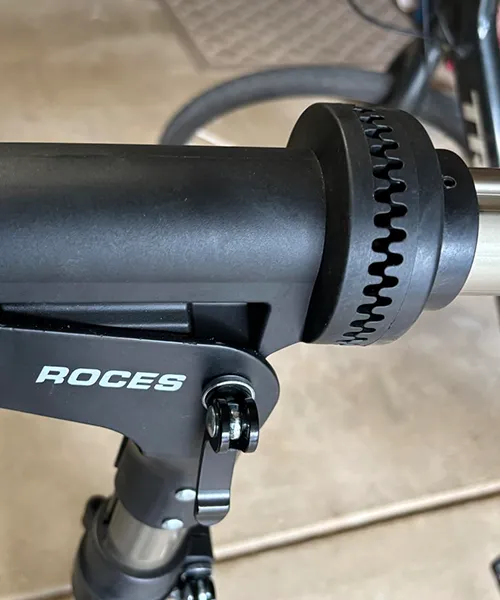
The clamp is rubber-lined and opens wide enough for oversized tubes. It grips without scratching, holds firmly without over-tightening. The quick-release lever operates smoothly and locks securely. Basic stuff done well at about the same price as the bikehand.
What’s Annoying:
This stand has 9,000+ reviews compared to BikeHand’s 12,000+, which means slightly less crowd validation. Not a deal-breaker, but when you’re choosing between two similar products, review count matters for confidence.
The weight is around 12-13 pounds, similar to the BikeHand but heavier than you’d expect for the size. Makes it stable, but less convenient if you’re moving it around frequently.
The folded size is comparable to other stands (around 40 inches), which means it’s not exactly compact. If you have limited garage space, you’ll be leaning this against a wall or hanging it on hooks.
E-Bike Capability:
The 60-pound capacity handles most e-bikes comfortably. I tested with bikes up to 58 pounds and it felt solid. The wider weight margin means you’re not operating at the limit of the stand’s capacity, which translates to more confidence when working on expensive e-bikes.
The caveat is battery position. E-bikes with rear hub motors and low-mounted batteries work better on repair stands than mid-drive e-bikes with high-mounted batteries. The weight distribution matters more than the total weight. High center of gravity makes any stand feel less stable.
Who Should Buy This:
You own heavier bikes in the 50-60 pound range. You want the front wheel stabilizer for easier drivetrain work. You need a bit more stability than budget stands provide. You’re looking for something that is a bit less renowned but also costs quite a lot less.
Who Should Skip This:
You only work on lightweight bikes under 40 pounds where the extra weight capacity is overkill. You got the cash to spend on the Bikehand. You need something lighter and more portable.
The Space-Saving Solution: ROCKBROS Bench-Mount Repair Stand
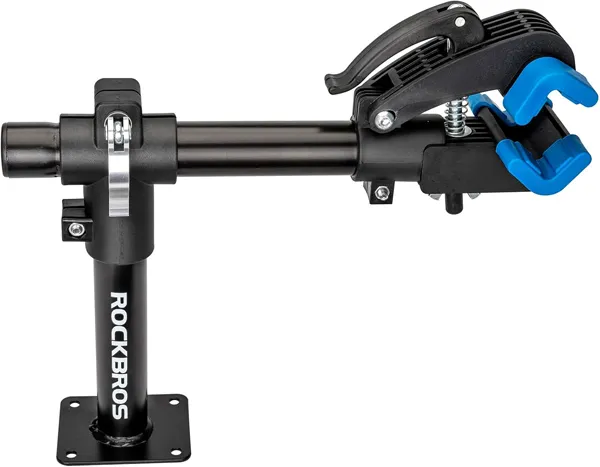
Now for something completely different: a repair stand that mounts to your workbench instead of standing on the floor.
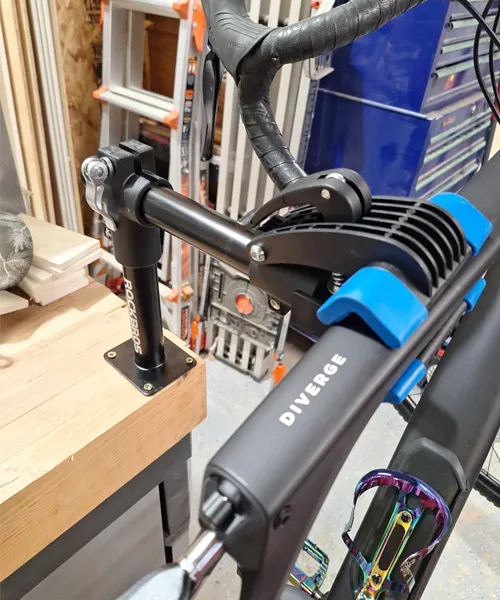
This is a clamp-style mount made from iron that bolts to the edge of a workbench or table. It holds bikes up to 44 pounds using a quick-release clamp that rotates to hold the bike by the seat post or frame tube. The clamp opens from 30mm to 75mm, which covers most bike tubes including oversized frames. When you’re not using it, you can flip it around against the workbench so it’s not sticking out into your workspace.
Why This Exists:
If you have a dedicated workshop space with a solid workbench, a bench-mount stand saves floor space compared to freestanding models. Instead of setting up a tripod stand every time you need to work on your bike, the mount stays attached to your bench permanently. Clamp the bike, work on it, unclamp, flip the mount against the wall. Done.
The clamp uses soft silicone lining that won’t scratch paint. It rotates to accommodate different clamping angles – you can grab the seat post vertically or the frame tube horizontally depending on your bike’s geometry. The four mounting screws hold it securely to workbenches up to about 2 inches thick.
What Works Well:
Space efficiency is the big win here. A freestanding stand takes up floor space even when folded. A bench mount takes up zero floor space when flipped against the workbench. If you’re working in a small garage or apartment where floor space is premium, this is worth considering.
The iron construction is durable in a way lightweight aluminum isn’t. It won’t flex under load, won’t crack if you bump it, won’t bend if you drop it. Basic, heavy, functional.
The price point makes it attractive as a secondary stand. If you already own a freestanding stand but want a quick-access option for routine work, this is cheap enough to justify having both.
What’s Not Great:
The 44-pound weight limit eliminates heavy e-bikes and touring bikes. This is a stand for regular bikes, not loaded touring rigs or 60-pound e-bikes. If your bike collection includes anything over 40 pounds, you’ll need a different solution.
You need a solid workbench to mount this to. Flimsy particle board tables won’t work. The mounting screws need to grip solid wood or metal, and the bench needs to be heavy enough that it doesn’t tip when you’re working on a bike. If you don’t have a proper workbench, this isn’t an option.
The clamp height is fixed based on where you mount it. Unlike freestanding stands where you can adjust working height, the bench mount is wherever you bolt it. If you mount it too high or too low for comfortable working, you’re stuck unless you want to unmount and remount it somewhere else.
Who Should Buy This:
You have a solid workbench in a workshop space. You need to save floor space. You work primarily on regular bikes under 40 pounds. You want a permanent quick-access stand for routine maintenance. You’re looking for a budget option that stays out of the way when not in use.
Who Should Skip This:
You don’t have a workbench to mount it to. You work on heavy e-bikes or touring bikes over 40 pounds. You need height adjustability. You prefer portable stands that you can move around or take with you.
E-Bike Compatibility: The Real Weight Limits
E-bikes are heavy. Really heavy. A mid-drive e-bike with battery can easily hit 55-65 pounds. Rear hub motor e-bikes with bigger batteries can push 70 pounds. Most repair stands are designed for regular bikes that weigh 20-35 pounds, then the marketing department slaps a “holds up to 80 pounds!” sticker on the box.
Here’s what I learned testing all three stands with e-bikes ranging from 45 to 65 pounds:
BikeHand (55 lb capacity): Handles e-bikes up to about 50 pounds comfortably. At 55 pounds it’s at the limit and you can feel it. The base is wide enough for stability but not confidence-inspiring when you’re wrenching stuck components. I’d use this for routine e-bike maintenance (brake adjustments, tire changes) but not heavy repair work.
CXWXC (60 lb capacity): Handles e-bikes up to 58-60 pounds confidently. The triangle base design provides better stability under heavy loads compared to narrower bases. The front wheel stabilizer helps keep the bike positioned correctly when working on drivetrain components. This is my minimum recommendation for regular e-bike maintenance.
ROCKBROS (44 lb capacity): Not suitable for most e-bikes. The 44-pound limit eliminates anything except the lightest e-bikes, and even then you’re at the capacity limit. If you intend to work on e-bikes, skip the bench mount model and go for the stable options.
Battery Position Affects Everything:
E-bikes with rear hub motors tend to be more stable on repair stands because the weight is low and centered. E-bikes with mid-drive motors and frame-mounted batteries have higher centers of gravity, which makes stands feel less stable even if the total weight is the same.
I tested a 55-pound rear hub e-bike and a 55-pound mid-drive e-bike on the same stand. The rear hub bike felt stable. The mid-drive bike with high battery mount felt tippy. Same weight, different distribution, completely different experience.
My E-Bike Recommendations:
- Under 50 lbs: BikeHand works fine for routine maintenance
- 50-60 lbs: CXWXC provides better stability and confidence
- Over 60 lbs: Neither of these stands is ideal, look at options with wider bases
And if your e-bike cost $3,000+, spend the extra money on a stand that feels rock-solid instead of worrying about it tipping over mid-repair.
How to Get Your New Bike Repair Station Set Up
You bought a stand. Now you need to use it without destroying your bike or tipping the whole contraption over. Here’s what 25 years of experience taught me.
Assembly (15-30 Minutes)
All three stands come mostly assembled. Attach the legs, install the center post (for freestanding stands) or mounting hardware (for bench mount), attach the clamp. No special tools needed – basic Allen keys cover everything. If you can assemble IKEA furniture without losing your temper, you can assemble a repair stand.
Don’t overtighten bolts. Snug is enough. If you’re cranking down with all your strength, you’re either stripping threads or compressing components that shouldn’t be compressed.
Clamping Your Bike (The Part Where You Can Ruin Everything)
Clamp on the seat post, not the top tube. Seat posts are round, metal, and designed to handle clamping forces. Top tubes aren’t always the same. Carbon frame bikes need extra care, use foam padding or clamp gently enough that you’re not crushing the tube.
Standard seat post diameter is 27.2mm to 31.6mm. All three stands handle this range easily. If you have an oversized or undersized seat post, check the clamp specs before buying.
Don’t overtighten the clamp. You want the bike held firmly enough that it doesn’t slip when you spin the cranks, but not so tight you’re crushing paint or deforming the post. These have soft plastic/rubber so you’d have to really over do it to cause any serious damage.
Test Stability Before Working
Before you start wrenching, push the bike. Try to tip it. Rock it side to side. If it feels unstable, widen the base legs (if adjustable), reposition the clamp higher or lower, or add weight to the base. Better to discover instability before you’re torquing a bottom bracket to spec.
Storage
Freestanding stands fold to about 38-40 inches. They’re super small, but they’re very manageable. If you have garage space, leave the stand set up – you’ll use it more often when it’s ready to go. If space is tight, fold it and lean it against a wall or hang it on wall hooks.
The bench mount flips against your workbench when not in use, which is the most space-efficient option if you have a dedicated space to put it.
Common Mistakes I’ve Seen (And Made):
- Not tightening base legs properly (stand tips over mid-repair)
- Working only from the drive side (uneven force causes tipping)
- Losing the quick-release pin (headache)
- Clamping near cable stops or bottle cage mounts (bent components)
- Overtightening the clamp (crushed paint, deformed seat posts)
Which Repair Stand Should You Buy?
Here’s my recommendation depending on your personal needs:
Buy the BikeHand if:
- You work on regular bikes under 50 pounds
- You want 360-degree rotation for easier access
- You need something portable that folds for storage
- You’re looking for the most popular choice
- You do routine maintenance and occasional repairs
- This is the best choice for most home mechanics working on standard bikes
Buy the CXWXC if:
- You own heavier bikes in the 50-60 pound range (including e-bikes)
- You want better stability for working on stuck components
- The front wheel stabilizer would make drivetrain work easier
- You’re looking to save a few bucks
- Best for mechanics who work on e-bikes or heavy touring bikes
Buy the ROCKBROS Bench Mount if:
- You have a solid workbench
- Floor space is limited and you need a space-saving solution
- You mainly do occasional work
- You want a permanent quick-access stand for routine maintenance
- You’re looking for the most budget-friendly option
- Best for us amateurs who prioritize space efficiency and fat wallets
What You’re Not Getting at This Price Point
Let’s be honest about limitations. Repair stands under $100 make trade-offs compared to shop-quality equipment that costs up to 10 times more.
You’re not getting the absolute maximum stability of high-end shop stands with wider bases and lower centers of gravity. You’re not getting precision-engineered clamps that operate smoothly for decades. You’re not getting a stand that’ll comfortably hold a 75-pound fully-loaded touring bike without feeling sketchy.
But here’s the reality: most home tinkerers don’t need shop-quality equipment. You need functional equipment that gets the job done without breaking the budget or your bike. All three of these stands work perfectly fine for routine maintenance and most repair work. And they’re highly portable so you can pack them in your car and have them ready when you need them.
I’ve used stands in this price range for years. They hold bikes. The clamps grip without scratching. The bases stay stable during normal use. That’s all that matters for home mechanics doing cable changes, brake adjustments, wheel truing, and routine repairs.
The expensive stands are better, sure. But they’re not hundreds of dollars better for the average Joe. That money buys you a lot of actual bike tools instead of incrementally better clamping mechanisms. For inspiration check out our bike checklists.
Final Thoughts From 25 Years of Fixing Bikes
The best repair stand is the one you’ll actually use. If you buy an expensive stand that’s too heavy to move and takes up too much space, it’ll sit in the corner while you work on bikes leaning against the wall. If you buy a cheap stand that tips over constantly, you’ll get frustrated and stop using it.
All three stands I’ve recommended here hit the sweet spot: affordable enough that you won’t feel guilty buying them, functional enough that you’ll actually use them, and stable enough that they won’t tip over during normal use.
My personal choice for most mechanics is the BikeHand. It’s the most popular option for a reason – 12,000+ people bought it, tested it, and most of them left positive reviews. That’s real-world validation that it works. The 360-degree rotation is genuinely useful, the build quality is solid for the price, and the weight capacity handles most bikes comfortably.
If you own e-bikes or heavy touring bikes, spend slightly more for the CXWXC and its 60-pound capacity. The extra headroom and stability are worth it when working on expensive bikes. But don’t overload a repair stand, marketers love higher numbers and if it could handle it they would let you know! Or else you’ll need a helmet while repairing for your own safety.
If you have a workshop and value floor space, the ROCKBROS bench mount is a clever solution that stays out of the way when not in use.
And no matter which stand you buy: zip-tie the quick-release pin to the clamp body. I’m serious. You’ll lose it otherwise, and you’ll remember this advice when you’re crawling around your garage looking for a tiny pin instead of working on your bike.
Want the complete Home Bike Mechanic Tool Checklist? I put together a printable PDF with every tool you actually need (and the ones you can skip) for home maintenance. Get it immediately, plus weekly maintenance tips and the occasional secret bike deals we only share behind locked doors. No spam, just useful information from one enthusiast to another.
Leave a Reply